The Long Island Home Seller's Playbook
See how I help Long Island homeowners figure out what their house is worth, decide what work is worth doing, compare offers and prevent problems before contract.

Selling your home is one of the biggest financial decisions you can make, and being prepared before you hit the market can help you avoid costly situations once you're under contract. If you schedule a one-on-one consultation, I'll help you get a firm understanding of everything that goes into the sale, including:
- What your house is worth in the current market
- What all your closing costs will be
- Which repairs may be worth doing—and which are not
- Potential pitfalls that may come your way
- Coordinating a realistic timeline for the move
That way, you can go into the selling process with confidence instead of surprises.
We figure out what the house is worth together.
- Establish value
- Understand the financial picture
- Plan the next move
Start With the Same Evidence
When I first meet with a homeowner who is thinking about selling, I don't want to walk into the house and simply announce what I think it's worth. We sit down together and open the MLS, and we go through the same information at the same time.
Usually we'll start by looking at homes that sold during the previous three months. If we don't have enough useful information, we'll expand the search to six months, and from there we start narrowing it down.
We want to compare the house to properties that are actually relevant:
- Similar size
- The same number of bedrooms and bathrooms
- A location that makes sense for comparison
- The condition of those properties
- What they actually sold for
So the homeowner is looking at exactly the same information I'm looking at.
Reach an Opinion of Value Together
A lot of times, before I tell them what I think the house is worth, I'll ask them what they think, because their answer tells me a lot about how they're seeing the market. Sometimes we arrive at almost exactly the same number, sometimes I'll encourage a seller to go higher than they were thinking, and other times I'll caution them about being too aggressive. What I don't want is a number that comes from me saying, “Trust me, I'm the Realtor.” I'd rather we look at the evidence and reach a reasonable opinion of value together.
If you want the short version of how I price a Long Island house, I also wrote How much is my house worth in today's Long Island market?.
Turn the Estimated Value Into a Financial Plan
Once we’ve reviewed the comparable sales and agreed on what we realistically think your house should sell for, we can start working through the figures.
I help you estimate what you’re likely to walk away with—and what that money needs to accomplish. That depends on your property, your debts and your plans after the sale.
What closing costs should a Long Island seller expect?
The main selling expenses usually include:
- Real estate commission (terms of the listing agreement and any buyer-agent compensation you agree to pay; my listing fee and buyer-agent compensation are separate considerations)
- New York State transfer tax. For a typical taxable home sale in Nassau or Suffolk County, the base state tax is $2 for every $500 of consideration, or fraction thereof—approximately 0.4%. On an $800,000 sale, that would be $3,200. The seller generally pays this tax. The state mansion tax on residential purchases of $1 million or more is generally paid by the buyer.
- Attorney fees (the fee quoted by your real estate attorney)
- Other transaction expenses and adjustments may include agreed buyer credits, certain title-related or payoff charges, outstanding property taxes or water bills, and closing adjustments. Some increase proceeds and others reduce them. Location matters: Queens and Brooklyn sales can involve additional city transfer taxes, so a Nassau or Suffolk estimate should not be reused without checking the applicable charges.
Mortgage, HELOC and Other Property Payoffs
We also account for any mortgage, home equity loan, HELOC or other lien that needs to be paid off as part of the sale.
These are debts being repaid, rather than fees for selling the house, but they still affect how much you receive. Your current loan balance may differ from the actual payoff amount, so the estimate needs to be updated using lender payoff statements as closing approaches.
What Does the Money Need to Cover Afterward?
Some sellers also want to pay off credit cards or other personal obligations with their proceeds. Others need to budget for moving or their next living arrangement.
Those expenses are separate from the sale’s closing costs. If they matter to your plans, we include them in the broader financial picture so you can understand what you’ll have available afterward.
If You’re Selling and Buying at the Same Time
When you’re purchasing another home, I help estimate the figures on both sides: what you’re likely to receive from your sale, the down payment and closing costs for the purchase, and how the timing of the two transactions affects access to your money.
The sale price is the starting point. What matters is understanding what you’ll have available to make your next move.
These figures are estimates, not a guarantee of final proceeds. We update them as the sale price, contract terms, payoff amounts and closing details become known. Your attorney confirms the legal closing charges, and questions about income or capital-gains taxes should be reviewed with your tax professional.
Plan What Happens After the Sale
Whether you are buying another house, renting, moving out of state or downsizing, what comes next can change the selling strategy, the timeline we need and even which offer makes the most sense.
If the next purchase depends on the money from this sale, I explain that process in my guide to selling and buying a home at the same time.
Only after we understand the likely value, the financial picture and the seller's next move do I want to start talking about how we're going to prepare and sell the property.
The listing price and the value of the house are not always the same number.
Why Starting Too High Can Cost Attention
One of the biggest mistakes I see sellers make is assuming the way to get more money for a house is to start with a higher asking price and leave room to negotiate. That made more sense in an older real estate market, where a buyer might see a house listed at $550,000 and automatically offer $525,000. That is not how I see buyers behaving on Long Island today.
Buyers have access to the same listings everybody else does. They have usually been shopping for a while, they have seen other houses, and they have a pretty good idea of what their money buys. If we put a house on the market noticeably higher than the competing properties, a lot of buyers are not going to come see it just so they can make us a lower offer. They are going to skip it. Then we lose appointments, we lose momentum, and eventually we may find ourselves reducing the price anyway.
Most of the Time, Value and Listing Price Stay Close
That is why the conversation we had at the kitchen table matters so much. We already looked at the comparable sales together and came to an opinion about what the house is worth. Most of the time, I would say around 90% of the time, the number we agree on is also going to be pretty close to where I want to list the property. We are normally looking at sales from the previous three months, and if we need more information, we may go back six months. Those buyers have been watching many of the same houses, so they recognize value when they see it.
If the distinction between those two numbers is what you are trying to sort out, I explain it here: What is the difference between listing price and sale price?
When More Aggressive Positioning Can Make Sense
There are situations where I may want to position the asking price a little more aggressively to create interest. If we believe a house is worth around $550,000, for example, there may be a reason to come onto the market around $500,000 or $520,000 rather than trying to start at $575,000 and negotiate our way down. The lower asking price does not mean I believe the house is worth less. The listing price is part of the marketing strategy. The objective is to get qualified buyers through the door and give the market a reason to compete.
What Competition Changes
That competition matters because something changes once a buyer actually walks through a house and wants it. They start picturing where their furniture is going to go, which bedroom belongs to their child, where their office could be, and what living there would actually feel like. At that point they are no longer comparing a photograph and a price on a screen. They are trying to buy a home they can picture themselves living in.
What the Market Tells Us After Launch
This is also why I do not like the strategy of starting too high just to “see what happens.” If nobody makes appointments, or people come through and nobody makes an offer, the market is giving us information. On Long Island, when comparable homes are selling and ours is sitting, we have to be willing to look at the price. Reducing it later is possible, but I would rather create the interest when the listing is new and buyers are paying the most attention to it.
Want to understand what your house may be worth?
We can sit down together, open the MLS and review the same comparable sales before you make any decisions.
I don't start with the kitchen and bathrooms.
- 01
Start With the First Impression
When I walk through a house with a seller, the first thing I'm thinking about is how the space feels. I'm walking into it as a stranger, which means my first impression is probably going to be similar to the first impression a buyer has.
- Does it feel cluttered or cramped?
- Is it dark?
- Does it feel open, bright and comfortable?
Before we start talking about spending money on renovations, there are usually things we can do to improve that first impression for little or no money.
I put the simple version of that list here: What should I do to prepare my house for showings?
- 02
Declutter Without Forgetting Someone Still Lives There
Decluttering is one of the first places we'll start. A homeowner can live with something for so many years that they don't even notice it anymore. It almost becomes part of the house. We'll walk through together and figure out what can be put away, thrown out or moved so the rooms feel more open and photograph better.
We'll look at whether we can get more light into the house by opening shades or curtains, and we'll try to create cleaner visual lines throughout the space. Less is more, especially in real estate photos. That doesn't mean somebody who is still living in the house has to empty it. We have to be realistic about the fact that this is still their home.
How Clutter Changes the Way a Space Feels
AI-generated illustration
Original photograph
No photograph was taken of this hallway while it contained belongings. The cluttered version was created with AI from the original photograph to demonstrate how belongings along the walls can interrupt sightlines and make the same space feel smaller. It is an educational illustration, not a photograph of the property's documented original condition. - 03
Finish Evidence of Old Problems
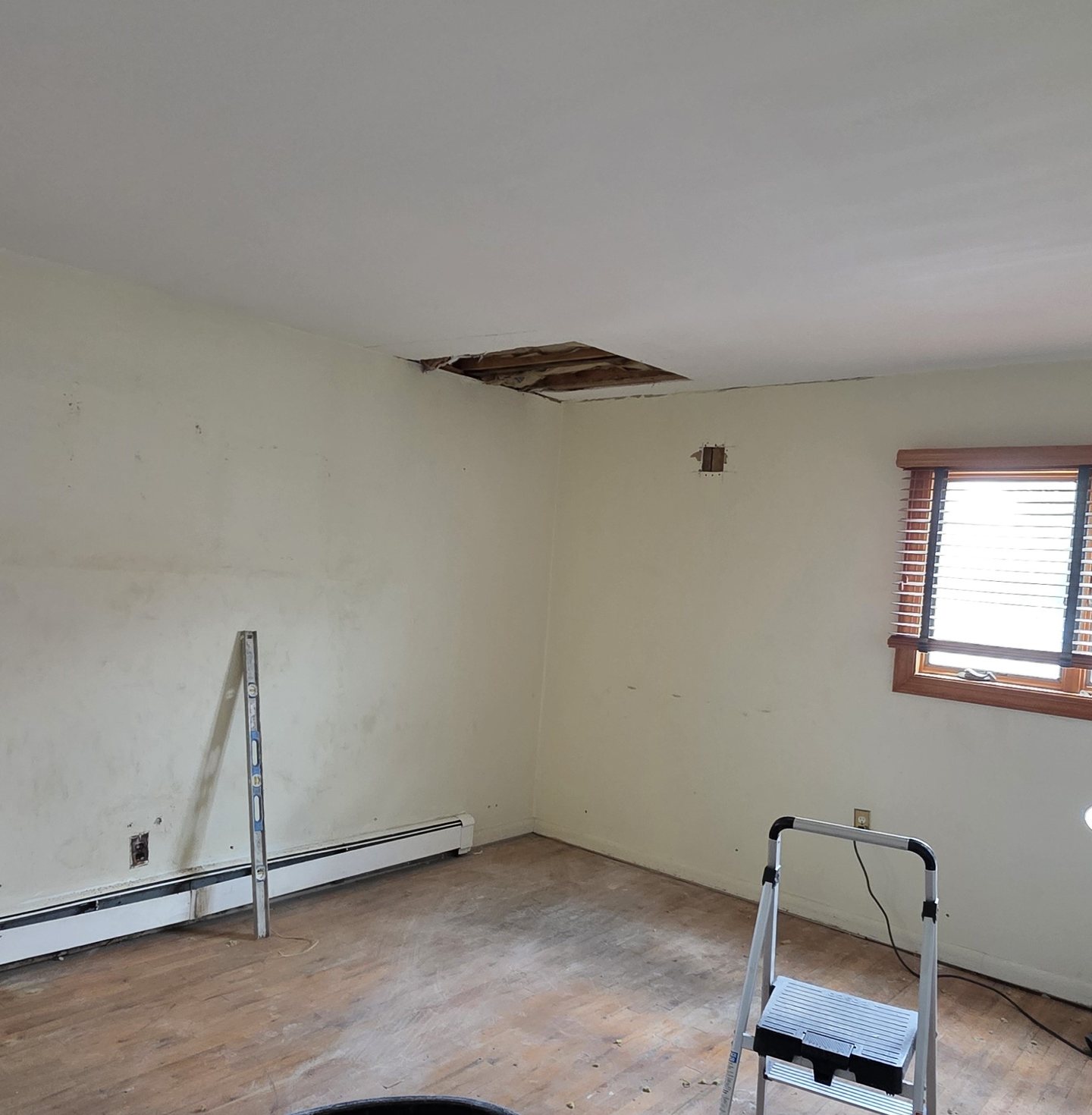
Then I want to know what has happened to the house over the years. Have there been roof leaks? Plumbing leaks? Termite damage? Pest problems? Holes in walls? Repairs that were completed but never completely finished cosmetically? One of the easiest things to correct is evidence of a problem that doesn't exist anymore.
If the bathroom leaked three years ago and the leak was repaired, but we go into the basement and can still see damaged plywood underneath it, why leave that there? The buyer doesn't know the history. They see the damage and start wondering whether there's still a leak, how serious it was, whether it was repaired correctly, and what else might be wrong. The same thing applies to an old water stain on a ceiling or damaged paint from a roof leak that was already fixed. If the underlying problem is gone, let's finish the repair so we're not creating a new concern over an old problem.
Before
After
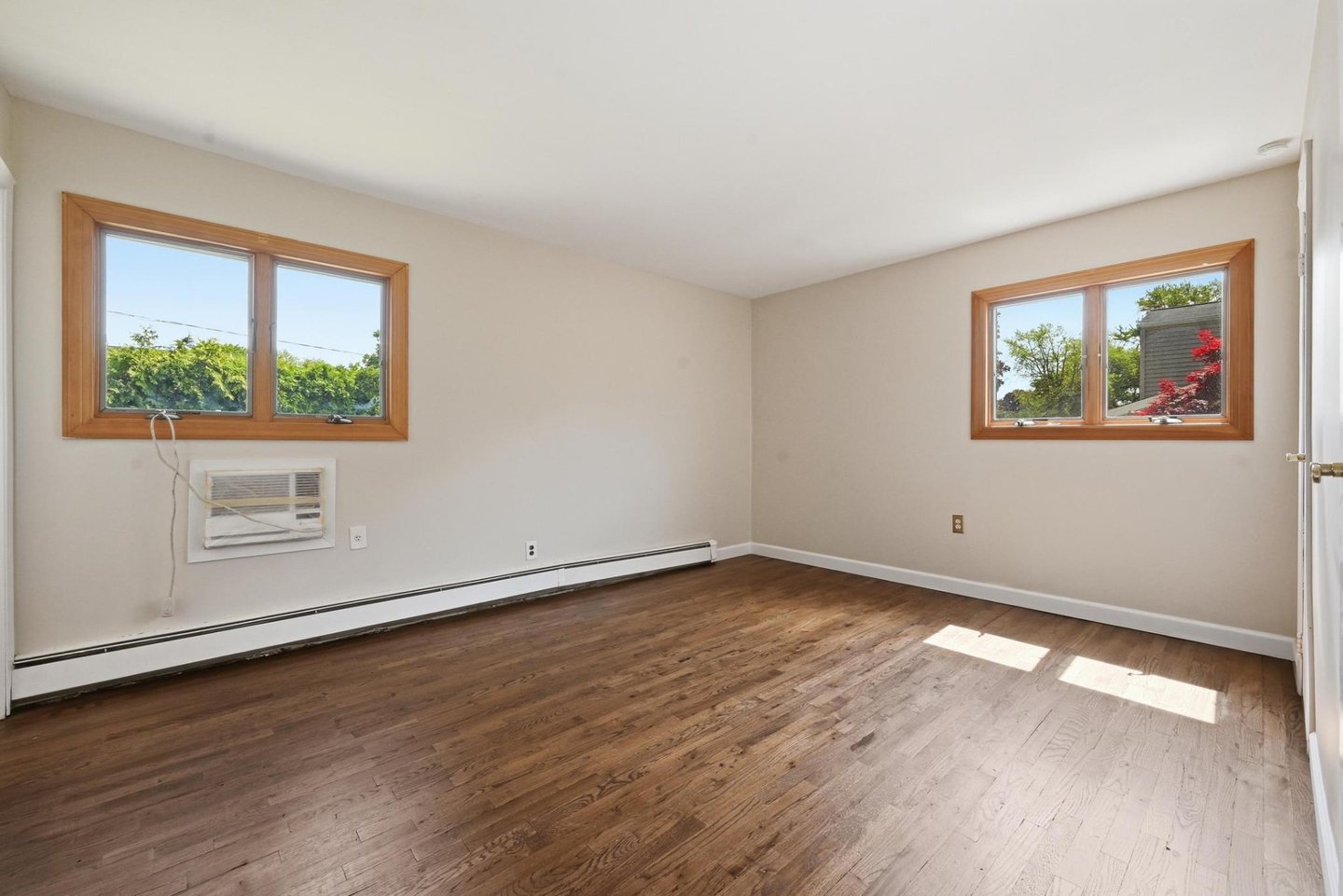
At 30 Columbine Lane, an open ceiling from a previous leak and worn hardwood floors were addressed before the home was listed. The ceiling and walls were repaired, and the existing floors were refinished.See the complete 30 Columbine Lane case study → A Jackson Heights co-op shows what happened when the seller initially resisted renovations, then changed course after seeing the market response.
- 04
Evaluate the Major Systems
After that, we start looking at the bigger things. What's the age and condition of the boiler? When was it last serviced? How old is the electrical panel, and is there room for expansion? Is the air conditioning working properly? How old is the roof, and approximately how much useful life does it have left? Are there structural concerns? I want to deal with the things that can make a buyer walk through the house and start mentally adding up a giant list of expensive projects.
Move-in ready doesn't mean brand new.
To me, it means somebody can buy the house, move into it, live comfortably and deal with whatever improvements they want to make over time. That's very different from walking into a house and immediately feeling like there are major problems that have to be addressed before you can comfortably live there.
- 05
Consider Cosmetic Improvements
Only after we've worked through those things do I want to start talking seriously about cosmetic improvements, and even then there is an order to it. I wouldn't recommend spending $20,000 on a kitchen while we're still looking at dirty carpeting and wood-paneled walls throughout the house. If there are hardwood floors underneath the old carpet, refinishing those floors may change the way the entire house feels. Removing dated paneling, repairing the walls and painting may do more for the buyer's first impression than putting all of the available money into one new bathroom.
Even when new flooring isn't in the budget, there may be a less expensive solution. If there's plywood underneath an old dirty carpet and the seller can't afford to install new flooring, putting down clean new carpeting may be enough. The buyer can decide later whether they want hardwood, vinyl or something else. We don't necessarily need to solve every future owner's design decisions. We need to figure out which problems are worth solving before we sell.
Painting can also make a major difference, both inside and outside, but I still want the priorities handled in the right order. I don't want to spend money making something prettier while ignoring a problem that is going to scare a buyer or become negotiating leverage later.
- 06
Decide What Makes Sense for This Seller
The last part of this is just as important as the house itself: what is the seller willing and able to do? They may not have the money for these projects. They may have the money but absolutely no desire to live through construction while they're preparing to move. That's part of the decision too. We can absolutely sell a house as-is. The walkthrough isn't about creating a mandatory renovation list. I distinguish three purposes: selling as-is; protecting existing value through targeted corrections, restoring function, missing features, unfinished repairs or appropriate investigation; and investing to add value where local evidence supports the full cost and time. These purposes can overlap in one plan. The middle purpose is not defined by a small budget. I explain the tradeoffs, and the seller decides what fits.
Sellers sometimes ask about offering the buyer a home warranty. It can be a useful extra, but when the money is limited I would not put it ahead of important repairs, updates or deferred maintenance. Whether it makes sense depends on the house and on what the warranty actually covers.
A missing feature can deserve a different conversation from a dated finish. My walkthrough does not replace an inspection, establish legal room use or guarantee an appraisal. Read about small repairs, missing features and appraisal questions. Not every repair is worth doing. I go through that decision here: Should I make repairs before listing my home? and Can I sell my house as-is on Long Island?.


The launch should make it easy for serious buyers to see the house.
Once the house is ready, I do not want to put it online without a plan and then wait to see what happens. The photographs, launch date, showing schedule and way we collect offers should work together.
Prepare the listing before it goes live
The marketing starts with the way the property is presented. I arrange professional photography and, when it makes sense for the property, additional video or other media. The description, photographs, price and showing instructions should all be ready before the listing becomes active.
Concentrate the early activity
Most of the time, I want the listing to go live on a Wednesday or Thursday and hold the first open house on Saturday. I choose the length of the open house based on the property, price and location, expected interest and what the seller needs. I also group private appointments into scheduled showing periods when possible instead of scattering them randomly throughout the week.
That makes the process more manageable for the seller, especially when somebody is still living in the house. It also allows buyers to see the genuine level of interest instead of walking through one at a time and assuming nobody else is considering the property.
I normally require at least 24 hours’ notice for an appointment unless the seller approves something sooner. Buyers still have an opportunity to see the house, but the seller is not expected to leave with no warning every time someone wants to come through.
Track the activity and move into offers
I use a digital sign-in system at open houses so we have a record of the activity and can follow up appropriately. My open-house guide explains how I prepare the home, check in visitors and follow up after the event. Once offers begin arriving, they are organized with the supporting information so the seller can compare the complete terms. The next section explains how I evaluate those offers with the seller.
The highest offer isn't always the best offer.
What We Evaluate Besides Price
When we start getting offers, I don't want the seller looking at nothing more than the price at the top of the page. Obviously the amount matters, but there are a lot of other things that can determine whether an offer is actually strong. We need to look at:
- Financing
- Down payment
- Pre-approval
- Contingencies
- Proposed closing date
- Anything else that could affect whether the buyer can actually get to the closing table
Let the Seller See the Same Information
I also want the seller to be able to see what I'm seeing. I use an offer system where the offers and supporting information can be organized in one place, so we're not having a conversation where I'm simply telling the seller what came in and asking them to trust my interpretation of it. We can go through the offers together, compare the terms, and talk about the strengths and weaknesses of each one.
The seller is given a username and password so they can log in to the portal at any time and see the same information shown here. The portal also calculates the seller's estimated net proceeds after commissions, fees, concessions, requests from the buyer or the buyer's agent, and the terms of the listing agreement. This allows the seller to evaluate the estimated net amount—not just a gross offer price that may not reflect what they will actually receive. What's important to me is that the seller can review this information whenever they want without having to wait for me to provide access.
For a complete explanation of how listing fees, buyer-agent compensation requests and seller net interact, see How Real Estate Commission Works on Long Island and in New York City.

How I Handle Multiple Offers
This becomes especially important when we have multiple offers. With the seller's permission, I believe in being as transparent as I reasonably can with the buyers who are competing for the house. If we have an offer at a certain price and another buyer wants to know what they need to do to be competitive, I'm generally comfortable telling them where they need to be. I'm not interested in creating a guessing game where buyers keep throwing numbers at us without knowing whether they even have a realistic chance.
A family-coordinated Kings Park sale shows how this can work in practice: 28 recorded buyer visits, a cash offer with an escalation clause, and a final sale price $36,000 above asking.
Protecting Against Appraisal Risk
Appraisal exposure is not only about comparable sale prices. Property condition and room characteristics can also raise questions. Before listing, we can consider visible function, missing features and unfinished repairs, and investigate where appropriate. My small repairs, missing features and appraisal questions answer includes a West Sayville example whose appraisal outcome was still pending; it is not a universal bedroom rule or an appraisal guarantee.
Price is still only one part of that conversation. If someone offers significantly over the asking price and they're financing the purchase, we also have to think about the appraisal. A buyer can offer whatever number they want, but that doesn't necessarily mean the bank is going to agree that the house is worth that amount. If the appraisal comes in low, we need to know what happens next.
When a Lower Offer May Be Stronger
There are also situations where the highest offer may not be the one I recommend. A slightly lower offer with stronger financing, more cash available, better terms, or less risk may ultimately put the seller in a better position. On the other hand, there are times when taking the additional risk for a substantially higher price makes sense. We have to look at the difference in money and decide whether the additional risk is worth taking.
My job in that situation isn't to make the decision for the seller. My job is to make sure they understand what each offer actually means. We look at the money, the terms, the financing, the appraisal exposure, and the likelihood of getting all the way to closing. Once we understand those things, we can make the decision together.
Thinking about selling?
Tell me a little about the property and what you are trying to accomplish. I will get back to you myself.
I would rather prevent a problem than negotiate it later.
A lot of people think negotiation is what happens when a problem comes up and everybody starts arguing about who is going to pay for it. I would rather do as much as possible before we ever get to that point. Once we're under contract, our options are determined largely by what the contract says. So I want to identify as many of the potential problems as we can while we still have the ability to make decisions about them.
Settle Inspection Issues Before Contract
In New York, the home inspection normally happens before the contract is signed. That gives us an opportunity to deal with inspection issues before both sides are legally committed to the transaction. If the buyer wants a repair, a credit, or is agreeing to take something as-is, I want that understood before the contract is signed. I don't want everybody discovering later that they had completely different expectations.
A Real Example of Repair Negotiations
Before I list a property, I offer to walk through the house with the seller and point out things I believe may come up later. I am not a licensed home inspector. This is not a professional home inspection, and I do not produce an inspection report. It is simply a practical walkthrough based on more than 11 years of working on real estate transactions and reviewing inspection reports.
In this case, the seller chose not to address anything before going to market. That was her choice, and it was completely reasonable to wait and see what the buyer’s home inspector found. Not every seller wants to spend money before listing.
The buyer’s inspection later identified several issues. The buyer’s attorney requested repairs, the seller’s attorney responded item by item, and the repairs the parties ultimately agreed upon were written into a repair rider to the contract. Looking for a real estate attorney? JB Law Group is one firm you can consider. You are free to choose your own attorney.
Some of that later negotiation might have been anticipated or reduced if the visible issues had been addressed before listing. The purpose of my walkthrough is not to force a seller to make repairs. It is to point out what I see, explain what may come up later, and let the seller decide how they want to handle it.
01 — The inspection findings
02 — The buyer's attorney requests repairs
03 — The seller's attorney responds
04 — The final repair rider
Names, email addresses, street addresses, signatures and contact information have been removed to protect privacy.
Define Appraisal Risk Before Contract
The same thinking applies when we're evaluating an offer that may be higher than the house is likely to appraise for. A buyer can offer a great number, but if they're relying on the bank to finance the purchase, we have to think about what happens if the appraisal comes in lower. That's why I may ask for an appraisal-gap guarantee before we accept the offer. Sometimes the buyer will guarantee the entire difference. Sometimes they'll tell us they can cover the difference only up to a certain amount, such as $15,000. Either way, I would rather know exactly what we're dealing with before we sign the contract.
Discuss Known Title Concerns Early
Title is another area I try to discuss early. We may already know about a missing certificate of occupancy, a lien, an unpaid debt, or some other issue that could affect the seller's ability to deliver clean title. If we know about something, we can start figuring out what needs to happen instead of waiting for it to surprise us later. Depending on the problem, that might mean working with an attorney, a title company, an expediter, a municipality or a contractor.
Surveys, Oil Tanks and Disclosure Questions
A few other items are worth raising with your attorney early. You generally don't need to order a new survey just to list the house. If you already have one, share it with your attorney. When the buyer's lender and title company accept it, it may save the buyer some cost. An old survey, or changes to the property since it was drawn, may mean an updated or new one is needed.
An oil tank normally stays with the property, and a sale alone does not automatically require removing it. Its condition matters, though. A leaking, unused or improperly abandoned tank can require attention, and an underground tank can raise concerns during the buyer's inspection. Any installation, testing or abandonment records should go to your attorney, who can review the state and local rules that apply to that property.
Sellers sometimes ask whether they have to tell buyers about a death in the house. Under New York Real Property Law § 443-a, a death in the house is generally not treated as a material defect that has to be disclosed. A buyer can ask in writing, and the seller can decide whether to answer. Any specific question about what to say should go to your attorney, and nobody should ever give a buyer a false answer.
When Something Unexpected Still Appears
Of course, we can't predict everything. Sometimes a title search discovers something nobody knew existed. Sometimes another issue develops while we're already under contract. When that happens, we have to deal with the actual problem in front of us and look at what the contract requires.
Test the Waters Before Accepting the Opening Demand
Even then, I don't automatically assume that the first number somebody asks for is the number we have to give them. If a buyer asks for a $10,000 credit, for example, we may respond with $3,000 and see what happens.
- 01Buyer requests $10,000
- 02Seller may respond with $3,000
- 03The eventual agreement may be $5,000, $6,000 or $7,000
Sometimes they accept it. Every situation is different, and we have to evaluate what the issue actually is, what it could cost, what our contractual obligations are, and how much risk there is in pushing back.
Good Negotiation Begins Before the Argument
The larger point is that I don't want to rely on negotiating ability to rescue a transaction from problems we could have addressed earlier. Good negotiation starts before there is an argument. We inspect the property, evaluate the financing, think about the appraisal, discuss known title issues, and put the important terms into the agreement while both sides still have the ability to decide whether those terms work for them.
If something unexpected still happens, then we work through it. I help the seller figure out what needs to be done, who we need to speak with, what the realistic options are, and what the contract requires. But the better job we do before signing, the fewer surprises we should have to negotiate after it.
Let’s just talk first.
No obligation and no pressure. Tell me a little about your situation and I’ll get back to you myself.
For shorter answers to the questions sellers ask most — whether to make repairs before listing, selling a house as-is, the difference between list price and sale price, preparing your house for showings, and the closing costs a Long Island seller should expect — the Knowledge Center covers each one in plain language.
← Back to Andrew Ragusa's Real Estate Playbook
Buying a home instead? Read the Buyer Playbook →
Selling a co-op? Read the complete explanation of building documents, buyer qualification and board approval.
Local seller guides: Smithtown · Kings Park · East Meadow · Bayside, Queens.
Dealing with an inherited property, foreclosure, tenants, a vacant home or another difficult situation? Read how I help with complicated real estate situations.